
Research and operating perspective on Revenue Flow Architecture™.
Methodology essays, vertical research, platform and technology pieces, and firm perspective, written by the senior practitioners who do the work.

The Five Revenue Levers You Can Actually Control
Revenue is an output. You cannot manage an output. You can only manage the five inputs that produce it.
Juan DeAngulo · August 31, 2026
What Your Commercial Engine Looks Like Under an Acquirer's Diligence Lens
When a buyer values your business, they are not buying last year's revenue. They are buying the odds that you can produce it again.
Juan DeAngulo · August 16, 2026
The Foundations of our Practitioner-Led Approach
Why the methodology behind deterministic AI is older than the technology that runs it.
Juan DeAngulo · June 26, 2026
What a Revenue Flow Snapshot Tells You in 48 Hours: and What to Do With It
Most commercial diagnostics take weeks and cost thousands of dollars before you know whether the engagement was worth it. The Snapshot is different. Here is exactly what you receive and why it matters.
Juan DeAngulo · June 16, 2026
Why Your Pipeline Stages Are Lying to You
Stage inflation, deal age creep, and the absence of exit criteria are not sales team problems. They are architectural failures. Here is how to diagnose them.
Joshua Rodriguez · June 9, 2026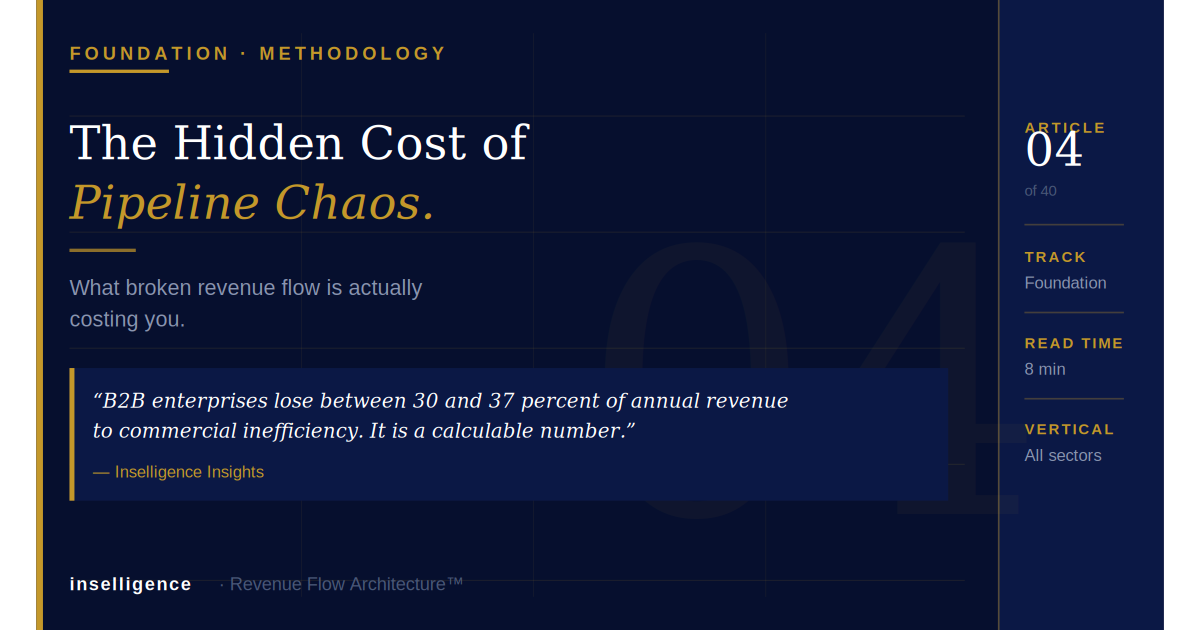
The Hidden Cost of Pipeline Chaos: What Broken Revenue Flow Is Actually Costing You
Revenue leakage is not a metaphor. It is a calculable number. And for most industrial, construction, and B2B services companies, it is far larger than leadership suspects.
Juan DeAngulo · June 8, 2026
AI Is Not a Revenue Strategy. It Is an Amplifier: for Better or Worse.
If your commercial process is broken, AI will make it broken faster and at greater scale. The firms that are winning with AI are the ones that built the architecture first.
Joshua Rodriguez · June 6, 2026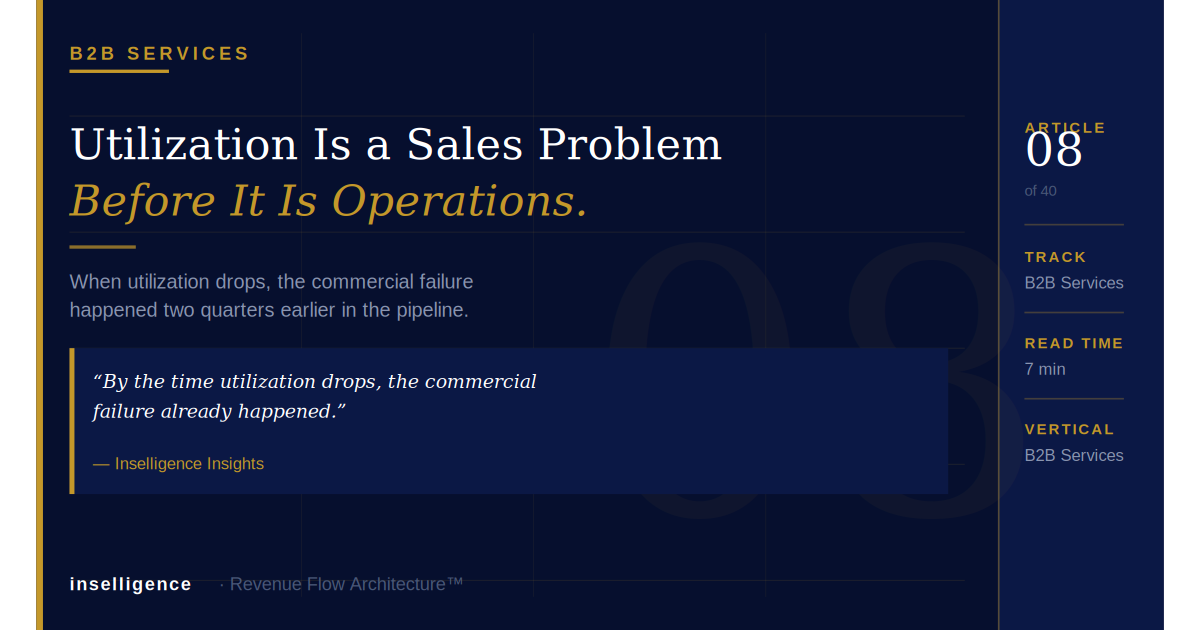
Utilization Is a Sales Problem Before It Is an Operations Problem
When utilization drops, the commercial failure that caused it happened two quarters earlier. The leaders who understand this manage pipeline and bench together. Everyone else manages the symptom.
Joshua Rodriguez · June 5, 2026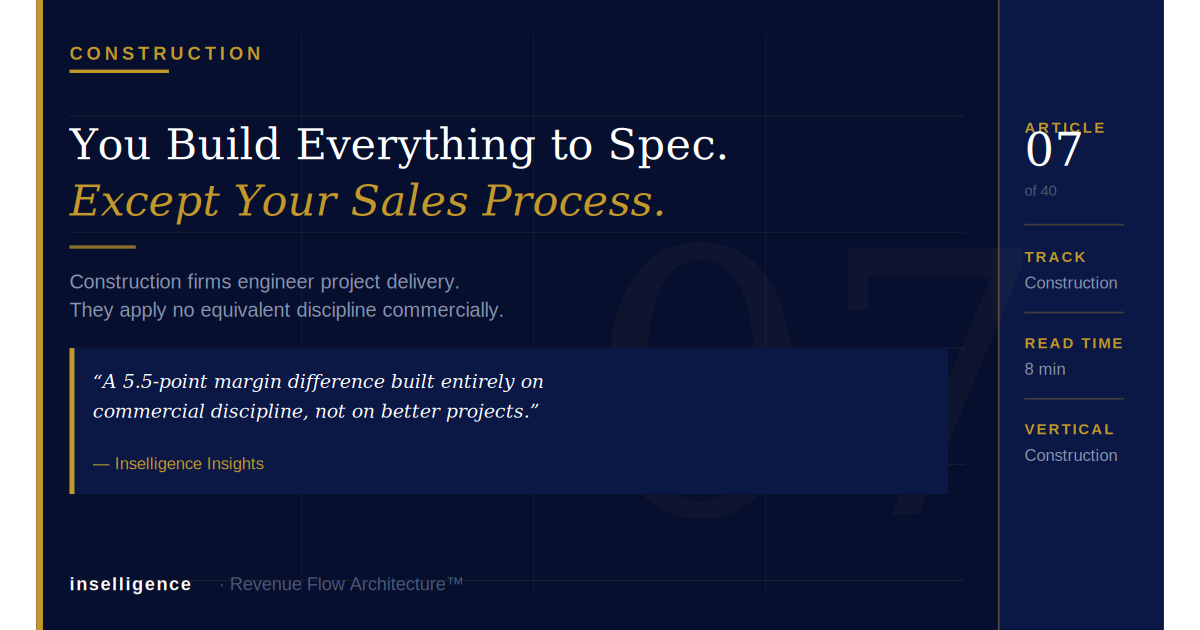
You Build Everything to Spec. Except Your Sales Process.
Construction firms engineer project delivery with precision. They apply no equivalent discipline to the commercial function that generates the projects. That asymmetry is costing them margin.
Juan DeAngulo · June 4, 2026
Your Revenue Engine Is the One System in Your Business You Never Engineered
You run disciplined operations. You manage projects with precision. You deliver on tight schedules. So why is your commercial function held together with spreadsheets and intuition?
Joshua Rodriguez · June 3, 2026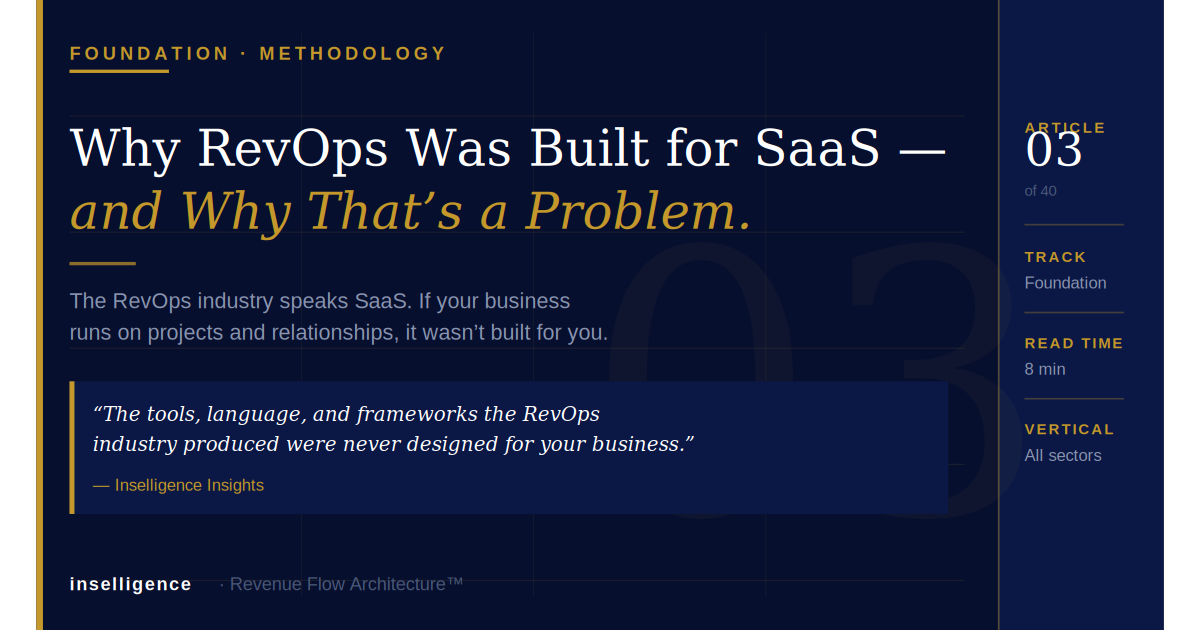
Why RevOps Was Built for SaaS; and Why That’s a Problem for Everyone Else
The revenue operations industry speaks SaaS: ARR, churn, PLG, freemium funnels. If your business runs on projects, relationships, and multi-month sales cycles, that language was never written for you.
Juan DeAngulo · June 2, 2026
Architecture Before Automation: The First Principle Every Commercial Leader Needs to Hear
Technology deployed on a broken commercial process doesn’t fix it. It accelerates it. Here is why architecture always comes first.
Juan DeAngulo · June 1, 2026Research and operating perspective, delivered monthly.
Methodology essays, vertical research and platform pieces from the senior practitioners. No noise, and you can unsubscribe at any time.